Running an agency or B2B services business is isolating. Not always. Not every day. But when the decisions that matter most land on your desk, you often face them alone.
That’s the reality for the vast majority of founders we work with – and it’s one of the most underreported barriers to growth.
The Problem Nobody Talks About
Founder loneliness doesn’t look the way people expect. You can have a full team, a packed calendar, and a business growing at pace and still feel entirely alone with the choices that actually count.
Hiring at a critical moment. Repricing your services. Letting go of a client that’s holding you back. Deciding whether your business is genuinely scalable, or whether it’s just you working harder.
These aren’t decisions you can pass to your team. And they’re rarely appropriate for friends or family.
The result is decision fatigue. Not the clinical kind – but the slow accumulation of unresolved questions that clouds your thinking, erodes your confidence, and makes the bold moves that would unlock growth feel too risky to make.
Left unaddressed, it leads to stagnation dressed up as caution.
What External Support Actually Does
This is where mentoring and coaching earn their place – not as a luxury, but as an operational necessity.
But not just any mentor or coach. The difference between useful and genuinely transformative comes down to one thing: lived experience.
There is no substitute for someone who has actually sat in your seat. Who has felt the pressure of making payroll during a slow quarter? Who has built a team, restructured it, and rebuilt it again. Who has strategised, designed and delivered plans at each stage of the scaling journey and knows the difficult decisions that need to be made along the way. Who has been through a sale – and knows what that process actually demands of a founder.
That first-hand experience changes everything about the quality of support you receive.
The right mentor or coach – one who has genuinely been in the hot seat – does three specific things your internal world can’t:
They give you perspective without an agenda. Your team, your investors, and your co-founder – they all have a stake in the outcome. A mentor doesn’t. That independence allows them to ask the questions no one else will, and give you an honest read when everyone around you has a reason to soften the truth. And because they’ve been there, they know which questions to ask.
They create accountability outside your own head. Most founders are good at setting intentions. They’re less good at following through when the business gets in the way. A regular conversation with someone who asks, “What happened with that?” is a deceptively powerful mechanism for actually moving things forward. That accountability lands differently when it comes from someone who knows exactly what it takes to follow through.
They compress your learning curve. Significantly. The best mentors have made versions of your mistakes already. They’ve navigated the same inflection points, misjudged the same hires, and recovered from the same missteps. That pattern recognition – knowing what a real scaling problem looks like versus what it appears to be – can save you months of painful and expensive trial and error. You don’t pay for their wisdom. You pay to avoid repeating their lessons.
Informal Networks vs Structured Support
Most agency founders have some version of a peer network. A WhatsApp group. A few industry contacts. The odd Slack community. These have genuine value. They’re accessible, low-commitment, and useful for a quick temperature check.
But they have limits.
Informal networks tend toward reassurance over honesty. Nobody wants to tell a peer that their pricing model is broken or their team structure won’t scale. Conversations stay surface-level. Advice is reactive and triggered by crisis, not a proactive strategy.
Structured mentoring or coaching is different in kind, not just degree:
- The relationship has a defined purpose
- There’s continuity – someone who understands your business over time, not just your question of the week
- The conversation is built around your goals, not whatever happens to come up
- The accountability is real – because there’s investment on both sides
Neither replaces the other. The best-supported founders have both: a peer network for connection and shared experience, and a structured mentoring relationship for the work that moves things forward.
The International Question
One theme that consistently comes up in mentoring sessions is international expansion.
Founders who’ve built strong UK businesses are asking — often for the first time with real seriousness — whether now is the time to look beyond the UK market.
Some are responding to genuine opportunity: client relationships that have opened doors in the US or Europe, or a proposition that travels well. Others are using international as a hedge against domestic uncertainty rather than as a deliberate strategy.
What’s valuable about raising this in a mentoring context is that it forces the right questions to surface early:
- Is your model genuinely exportable, or does it depend on founder presence and relationships that don’t scale?
- Do you have the operational infrastructure to support international delivery, or are you building on a foundation that’s already stretched?
- What does success actually look like at 12, 24 and 36 months — and does the risk-reward calculation make sense for where the business is now?
International expansion is a legitimate growth lever for many agencies. But it’s one that benefits enormously from external perspective — someone who can help you separate ambition from strategy, and assess readiness without the bias of wanting it to be true.
Choosing the Right Mentor or Coach
Not all mentoring and coaching is equal. A few things to look for:
Non-negotiable: first-hand, lived experience. For agency founders, this means someone who has actually run, scaled, or sold an agency. Not someone who has advised agencies from the outside. Not someone with a coaching qualification and a business book. Someone who has felt the weight of the decisions you’re facing – and made them. Agency economics, client concentration, talent dependency, service productisation – these are distinct challenges that require lived understanding, not observed understanding.
Honesty over positivity. In early conversations, notice whether the person pushes back, asks uncomfortable questions, or simply validates what you’re already thinking. You don’t need a cheerleader. You need someone who will tell you what you don’t want to hear clearly and constructively.
The right type of support. Coaching is facilitative. It helps you find your own answers. Mentoring is directive – it draws on direct experience to tell you what they’d do. Know which you need, and be honest about it.
Treat it as an investment. The founders who get the most from these relationships come prepared, follow through on commitments, and engage seriously. You get out what you put in.
This isn’t expensive or complicated to build. But it requires intention. Most founders fall into support relationships reactively, when a crisis forces the issue. The ones who build this structure proactively are consistently better positioned – not because they have more information, but because they’re not making critical decisions in a vacuum.
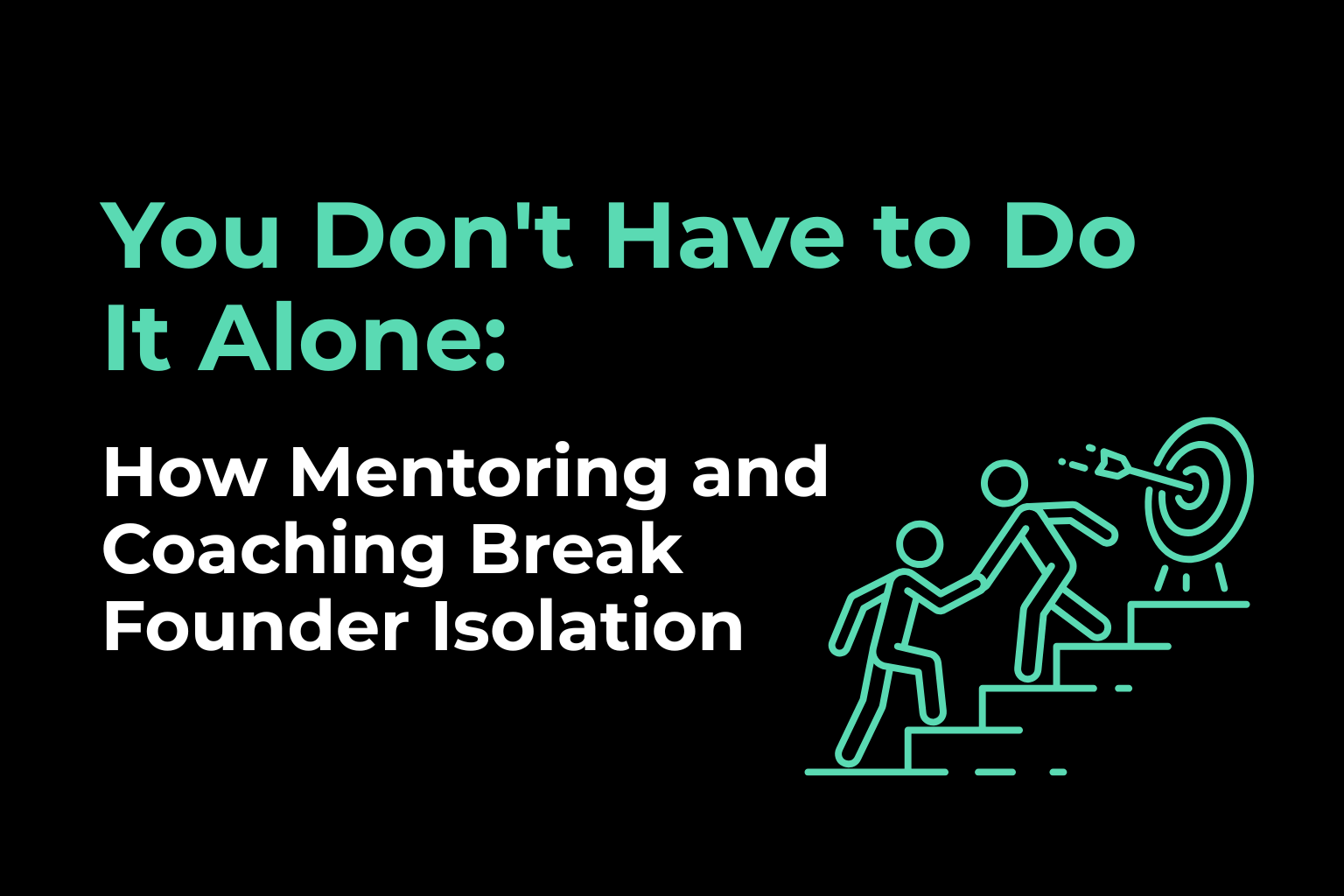
You don’t have to do it alone. More importantly, you shouldn’t.
Want Support as You Scale?
If you’re navigating the challenges of growing your agency or B2B business – from building the right team around you to planning your next stage of growth – our Growth Consulting and Advisory service is built for founders at exactly this stage.
👉 Find out how we work with agency founders here
Steven Mallon is a Partner and Lead Advisor at Scaled Consulting, working with digital and marketing agency founders on growing, scaling and selling their businesses.